The Unified Loan: How to Finance Purchase and Rehab Costs in One Closing
By Quanta FinanceUpdated 14 min read
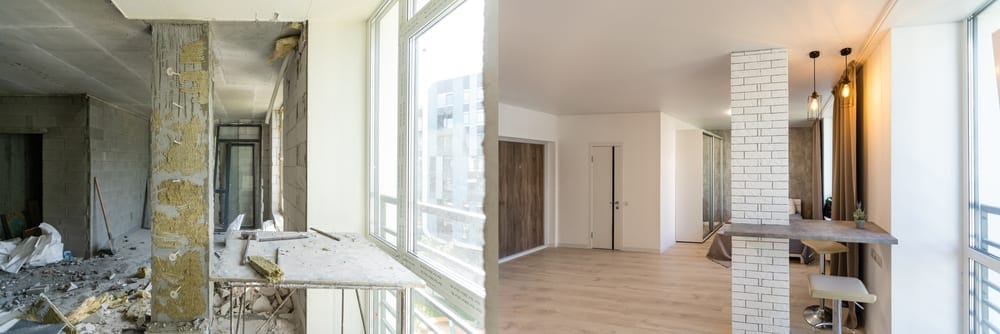
Is there financing that covers both property purchase and rehab?
Yes. One loan can cover both the purchase and the rehab in a single transaction. At Quanta Finance, our fix-and-flip and heavy rehab loans underwrite your acquisition cost and your full renovation budget together. You get one loan and one closing.
This post covers how that works, who it fits, and why the math usually favors one loan over two.
Why Two Loans Cost More Than You Think
Investors new to distressed assets often assume the capital stack works like a standard home purchase: you find a lender, get approved, close, and you are done. With a distressed property it is more complicated and more expensive.
What Financing a Distressed Property Actually Looks Like
Financed the traditional way, a distressed property means two separate capital events:
Step 1, the acquisition loan: You take a conventional bank loan, a hard-money loan, or a bridge loan to buy the property. It covers the purchase price and that loan’s closing costs, nothing else.
Step 2, the rehab loan (or your own cash): Once you own the property, you need a second source of capital for the renovation. That might be a separate hard money draw facility or a construction line of credit. More often it is your own cash.
At best, you go through underwriting twice, pay two sets of closing costs, and manage two lenders with two draw schedules. At worst, a delay on the rehab money stalls your contractor, puts you in breach of your purchase agreement, or has you paying for materials out of pocket while you wait.

The Real Cost of Splitting Your Financing Into Two Loans
Two closings look inefficient on a spreadsheet. Across a portfolio, the friction compounds:
- Duplicate closing costs. On a $300,000 purchase, the first loan can run $8,000–$14,000, then you pay another origination fee and closing costs on the rehab facility.
- Holding costs run longer when you cannot break ground right after closing because the rehab money is not in place.
- Contractors lose patience when you cannot commit to a start date.
- Your cash gets tied up if you bridge the gap yourself while the rehab loan funds.
- You miss the next deal because the cash is sitting in a renovation your lender was supposed to cover.
How To Finance Purchase and Rehab Costs in a Single Transaction
A unified loan puts your purchase price and your renovation budget in one loan.
Here is how it works:
One Underwriting Process
Instead of being underwritten twice for two separate purposes, you present the whole project to one lender in one review. The loan is sized on the total project cost: purchase price plus the full scope-of-work budget.
At Quanta, our underwriters evaluate:
- The acquisition price relative to the current as-is value
- The scope and cost of your renovation plan
- The projected After-Repair Value (ARV) once the renovation is complete
- Your experience and track record
One application. One approval. One closing.
Draw Structure for the Renovation Budget
The acquisition portion funds at closing like any other purchase loan. The renovation budget sits in a draw account and is released in tranches as work is completed and verified digitally. The money tracks actual progress on site, which protects both you and us.
Typical draw schedules at Quanta work as follows:
- Progress draw: released as each phase of construction is completed and verified
- Final draw: released at substantial completion, often tied to the certificate of occupancy or final inspection
The draw process is digital, so no third-party inspector has to visit the site, which can take up to 10 days. Our in-house team reviews your uploaded photos right away and funds your reimbursement within 24 to 48 hours. You get your out-of-pocket costs back fast and your contractors stay on schedule.
How Much Can You Actually Borrow?
Unified loans are sized as a percentage of ARV or total project cost. Depending on the loan structure, sample scenarios include:
- Up to 90% or 100% of the total project cost (purchase + renovation)
- Up to 75% of the projected ARV
The property’s future value drives how much you can borrow.
The Numbers Side by Side: Two Loans vs. One
Here is a hypothetical deal with real numbers, to show how the unified approach changes the math.
The deal: a distressed single-family in an established neighborhood. Purchase price $220,000. Estimated renovation cost $75,000. ARV $370,000.
Scenario A: Two Separate Closings
| Item | Cost |
|---|---|
| Acquisition loan origination (2 pts on $220K) | $4,400 |
| Acquisition closing costs (title, escrow, etc.) | $3,200 |
| Rehab loan origination (3 pts on $75K) | $2,250 |
| Cash out of pocket at closing (30% of $220K, typical LTC gap) | $66,000 |
| Cash reserves required to bridge rehab before rehab loan funds | $15,000–$25,000 est. |
| Total transaction friction costs | $11,650 |
| Total cash required at closing + bridge | $81,000–$91,000 |
Scenario B: The Unified Loan
| Item | Cost |
|---|---|
| Unified loan origination (2.5 pts on $295K total project cost) | $7,375 |
| Single set of closing costs | $3,500 |
| Cash out of pocket at closing (based on total project cost LTC) | $[Based on your program] |
| Cash reserves required to bridge rehab | $0 |
| Total transaction friction costs | $10,875 |
| Total cash required at closing | Significantly reduced |
In this example the unified loan costs a bit more at origination. It removes the second set of closing costs and the bridge cash, and the project starts weeks sooner. Quanta charges no application fee for a live quote and no prepayment penalty if you finish the renovation and pay the loan off early. Faster execution means lower holding costs and a faster return of capital.
How Unified Financing Changes Your Return Profile
Unified financing shows up in every metric investors use to judge a deal.
Keep More Cash Available for Your Next Deal
Cash is the biggest competitive advantage in distressed property investing. The investor who can move when a deal hits the market wins, and that takes liquid capital.
Finance both purchase and rehab through one loan and your reserves stay intact. Instead of putting $75,000 of your own cash into the renovation, that money stays in your account.
Experienced investors call this “dry powder”: uncommitted cash held for the next opportunity. Every dollar you do not tie up in a renovation is a dollar for the next deal, a distressed note, or a gap on a portfolio purchase.

How Financing Your Rehab Improves Your Cash-on-Cash Return
Cash-on-cash return (CoC) is the annual cash income from an investment divided by the cash you put in:
Cash-on-Cash Return = Annual Pre-Tax Cash Flow ÷ Total Cash Invested
The denominator is cash you actually wrote a check for. Less out-of-pocket cash at closing means a higher CoC return, even if the property’s income does not change.
Take the deal above. Fund the renovation yourself and you have put in $75,000 more than you had to. Finance it through a unified loan and that cash works elsewhere. Same property, same renovation, same exit, different return, depending on how you structured the capital.
Make Your Equity Work Harder With Better Leverage
Unified loans treat the total project cost as financeable. The lender funds a larger share of the project and less of your equity is at risk.
On a well-underwritten deal, the full upside of the property’s ARV accrues to your equity even though the lender funded most of the project.
Close More Deals in Less Time With the Same Capital
Experienced flippers care less about any one deal’s return and more about how many times they can cycle their capital in a year. Higher velocity of capital means more deals in less time with the same equity. That is often worth more than an extra point on a single deal.
A unified loan speeds up the cycle:
- No time lost finding a second lender after the purchase
- You break ground right after closing
- The renovation-to-exit timeline shrinks by weeks or months
- Your equity comes back sooner for the next deal
Only Pay Interest on What You’ve Actually Drawn
With a Quanta unified loan, you do not pay interest on the whole renovation budget from day one. We charge interest only on what you have pulled from the draw account. By not paying interest on unused funds during the early stages of the project, you keep your monthly carry low and protect your final ROI.
Is a Unified Loan Right for Your Investment Strategy?
Any investor buying a property that needs renovation can use unified financing. It fits these profiles best:
Active fix-and-flip operators running two or more projects at once. One loan lets them grow the pipeline without putting up proportionally more equity.
Investors bidding on below-market distressed assets that need immediate, substantial renovation. A rehab budget locked in at closing helps when the seller wants certainty.
Newer investors without deep reserves. They do not have to hold large personal cash positions to bridge the gap between purchase and renovation funding.
Portfolio builders refinancing finished renovations into long-term holds (the BRRRR method). One loan in, one loan out, one refinance event.
Common Questions About Financing Both Purchase and Rehab Costs
Does the lender control how I spend the renovation budget?
Yes. Draw requests are tied to completed work, verified digitally. Instead of waiting up to 10 days for a third-party inspector to visit the site, you upload geo-stamped photos of the finished work to our portal. That keeps cost overruns in check, protects the collateral, and lets us fund your reimbursement within 24 to 48 hours. Experienced investors find draw schedules straightforward to work with.
What happens if my renovation costs come in over budget?
It depends on your loan agreement and the size of the overage. At Quanta, we work with borrowers when scope changes. Minor overages can often be absorbed by the contingency reserve. Significant scope additions may need a modification to your loan. Talk to us before the costs are incurred.
How is the renovation budget verified?
At origination, we review your scope of work and contractor bids. Most lenders want itemized contractor estimates, not ballpark figures. A well-scoped renovation budget is the single biggest predictor of project success, and walking through it at underwriting catches problems before they cost you money.
What if I want to self-manage portions of the renovation?
Lender policies vary. Some unified loan programs require licensed general contractors for all work. Others allow owner-management of certain scopes. Ask about this when structuring your loan; it affects both draw disbursement and cost verification.
Can I use a unified loan on a multi-family property?
Yes. Quanta directly funds commercial residential value-add deals on 5- to 50-unit buildings. If you are buying a complex that needs a facelift and a management overhaul, contact us about the asset. Your Dedicated Rep will walk through how our capital bridges the gap until the property is stabilized and ready for permanent financing.
How quickly can I close?
Unified loans are bridge products built for speed. For an indicative quote within 24 hours, you do not need a complete application package or a detailed scope of work. Give us the property address and your FICO score range. Once you are ready to move forward with a full package, we can close your loan in as little as 5 business days.
The Unified Loan vs. Other Renovation Financing Options
Here is how the unified loan compares with the other ways investors fund purchase plus rehab.
| Financing Method | Covers Purchase | Covers Rehab | Single Closing | Works on Distressed Assets | Speed to Close |
|---|---|---|---|---|---|
| Unified / Fix-and-Flip Loan | Yes | Yes | Yes | Yes | Fast (as little as 5 business days) |
| Conventional Bank Loan + HELOC | Yes | Partial | No | No, minimum condition requirements | Slow (30–60 days+) |
| Hard Money Purchase + Separate Rehab Line | Yes | Yes | No | Yes | Moderate |
| FHA 203(k) | Yes | Yes | Yes | No, property must meet HUD standards at origination | Very slow (60–90 days) |
| Cash Purchase + Private Rehab Capital | Yes | Yes | N/A | Yes | Fast, but capital-intensive |
| Home Equity Loan on Existing Asset | No | Yes | N/A | Yes | Moderate |
The unified loan from a private lender covers the full project in a single closing, at a speed institutional mortgage products cannot match. For investors who need to move in days rather than months, it is often the only tool that fits.
What to Have Ready Before You Apply
Getting initial numbers does not require a mountain of paperwork. For a term sheet and an indicative quote within 24 hours, you only need the property address and your FICO score range.
Once you are ready to move from an initial quote to a fully funded closing, being organized speeds things up. Have these ready:
- Executed purchase contract (or LOI at minimum)
- Property address and basic details: beds, baths, square footage, and lot size
- Scope of work with line-item contractor estimates; the more detailed, the better
- Comparable sales supporting your ARV projection
- Your entity documentation if purchasing in an LLC or other business entity
- Experience summary: prior projects completed, exits, and hold periods
- Proof of liquidity showing you have the required capital on hand
It does not need to be perfect on day one. Your Dedicated Account Manager will help fill gaps, clarify scope, and structure the deal. A solid package just gets you to a funded closing faster.

One Quote. 24 Hours. No Application Required.
The case for financing purchase and rehab in one transaction is straightforward: less friction, more liquidity, better metrics, and faster execution. Experienced distressed-property investors build their businesses around it.
Tell us about your deal and get an indicative quote within 24 hours. A Dedicated Account Manager will walk through your numbers and your scope of work and structure a loan that fits the project.
Tags
- Fast real estate funding
- Private lenders
- Real estate investor financing
Related Articles
All investment articles
Private Lending8 min read
Private Lenders vs. Banks for Real Estate Investing: 2026 Comparison Guide
Private lenders vs. banks for real estate investors in 2026: loan-to-cost vs. loan-to-value, draw reimbursement, appraisals, and closing speed.

Private Lending10 min read
The Complete Guide to Private Lenders for Real Estate Investors
How private lenders fund real estate investors: the loan types, how they differ from banks, the approval process, and when to use each program.

Private Lending6 min read
Private Lenders for Real Estate Investors: When to Use a Bridge Loan
When a bridge loan fits an investment deal, how it differs from a construction loan, and why investors use private lenders instead of banks.
Direct Lending. Quick Decisions. Clear Terms.
Ready to Fund Your Next Deal?
Tell us about your next project or submit a quick application today!